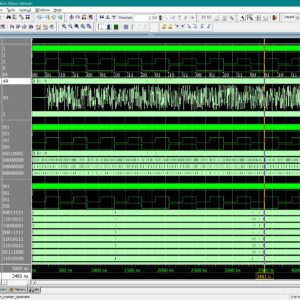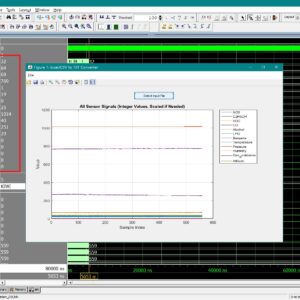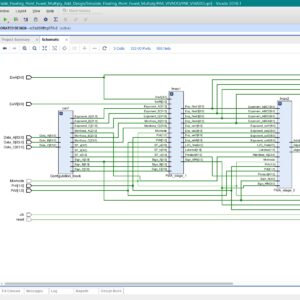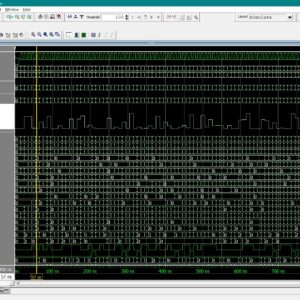
Improvement of this project:
- The proposed fixed-width multiplier reduces routed LUT utilization by 16.67%–25.00% through selective truncation and partial-product reduction, making it suitable for compact VLSI applications.
- Hybrid Radix-4 Booth encoding and carry-only guard logic reduce the critical path delay by up to 20.06%, supporting faster arithmetic operations in signal and image processing applications.
- The proposed signed boundary compensation technique reduces mean error distance by 33.2%–38.0% compared with uncompensated variants, improving the accuracy of the truncated output. However, further optimization is needed to match the accuracy of existing multipliers.
Proposed Title:
Design and Analysis of an Area-Efficient Fixed-Width Approximate Radix-4 Booth Multiplier Using Selective Truncation and Signed Boundary Compensation
Proposed Abstract:
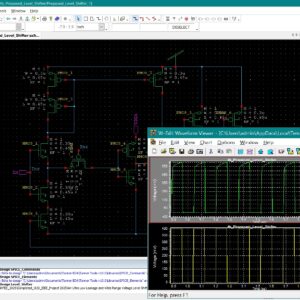
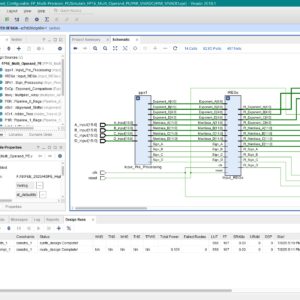
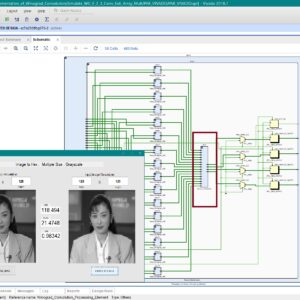
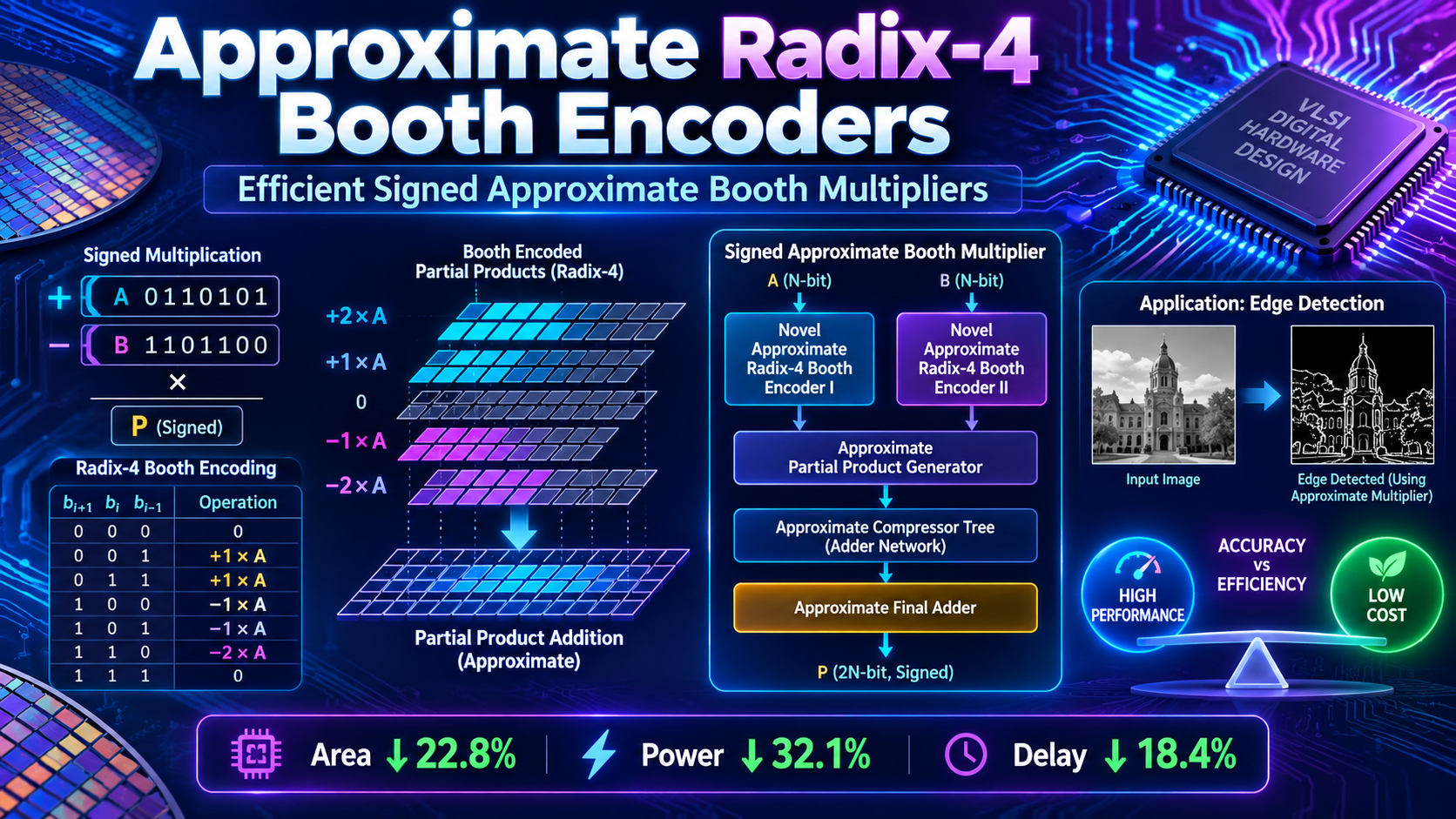
Approximate multipliers are widely used in digital signal processing, image processing, computer vision, and embedded systems, where reduced hardware complexity and faster computation are important. These multipliers offer advantages in area and delay, but approximation errors and increased power consumption in certain operating conditions remain significant challenges. Existing approximate Radix-4 Booth multipliers use exact encoding in higher-weight columns and approximate encoders and compressors in lower-weight columns to reduce hardware requirements. However, these architectures generate a 16-bit product for 8-bit operands, resulting in additional hardware when only a scaled 8-bit output is required. To address this limitation, this work presents an area-efficient signed fixed-width hybrid Radix-4 Booth multiplier using selective truncation and signed boundary compensation. The proposed architecture divides the partial-product array into three regions, where columns 15–12 use exact Booth logic, columns 11–8 employ AR4BE1 and AR4BE2 approximate encoding with selected compression, and columns 7–0 undergo selective truncation. The lower six columns are eliminated, while columns 6 and 7 retain carry-only guard logic. The main novelty lies in combining retained-column approximation, selective partial-product elimination, and signed Booth boundary estimation to generate an 8-bit product without computing the complete 16-bit result. The proposed designs are developed using Verilog HDL and verified through ModelSim with one million input samples per design. FPGA implementation is performed using Xilinx Vivado 2020.1 targeting an Artix-7 device. Experimental results demonstrate a 16.67%–25.00% reduction in routed LUT utilisation, with delay improvements of up to 20.06% compared with the corresponding existing implementations. Although the proposed architecture introduces higher approximation error and does not consistently reduce dynamic power, it provides a practical area–delay trade-off for fixed-width arithmetic applications.
” Thanks for Visit this project Pages – Buy It Soon “
Terms & Conditions:
- Students are advised to watch the project video file output before the payment to test the requirement, correction will be applicable.
- After payment, if any correction in the project is accepted, but the requirement change is applicable with updated charges based upon the requirement.
- After payment, the student having doubts, corrections, software errors, hardware errors, and coding doubts are accepted.
- Online support will not be given more than 3 times. An initial explanation will be given end-to-end from scratch. Also provide recorded video.
- For the first time explanations, we execute all the codings and results in your system, and we record and provide completely with video file support; for the other 2, we can provide doubt clarifications only.
- If there is any issue with the software licence/system error, we can support and rectify that by the end of the day.
- Extra Charges For duplicate bill copies. Bill must be paid in full, no part payment will be accepted.
- After payment, we must send the payment receipt to our email ID.
- Powered by NXFEE INNOVATION, Pondicherry.
Payment Method:
- Pay the Add to Cart Method on this Page
- Deposit cash/check on our account.
- Pay Google Pay/Phone Pay: +91 9789443203
- Send cheque through courier
- Visit our office directly
- Pay using Paypal : Click here to get NXFEE-PayPal link