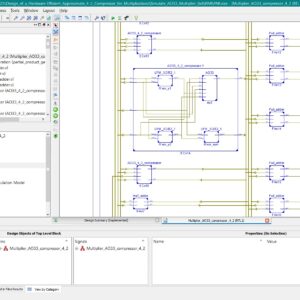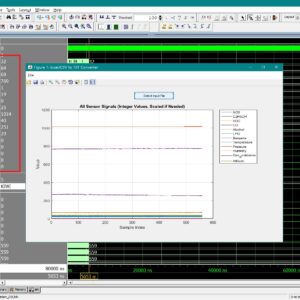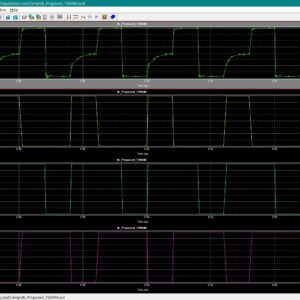
Improvement of this project:
- Reduced Hardware Complexity: Replaces eight weight banks with two compact processing elements and local weight memories.
- Lower Power Consumption: Event-driven AER processing reduces unnecessary memory accesses and switching activity.
- Improved Memory Efficiency: Double-buffered AER memory stores active spike addresses instead of dense spike vectors.
- Optimized Processing Architecture: Shared scheduling and reusable PEs enable efficient neuron computation across all SNN layers.
- Efficient Spike Communication: Priority-based AER routing simplifies inter-layer spike transfer and supports scalable processing.
Proposed Title:
Design of a Low-Power Two-PE SNAVA-Inspired Event-Driven Spiking Neural Network Accelerator for ECG Arrhythmia Classification
Proposed Abstract:
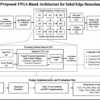
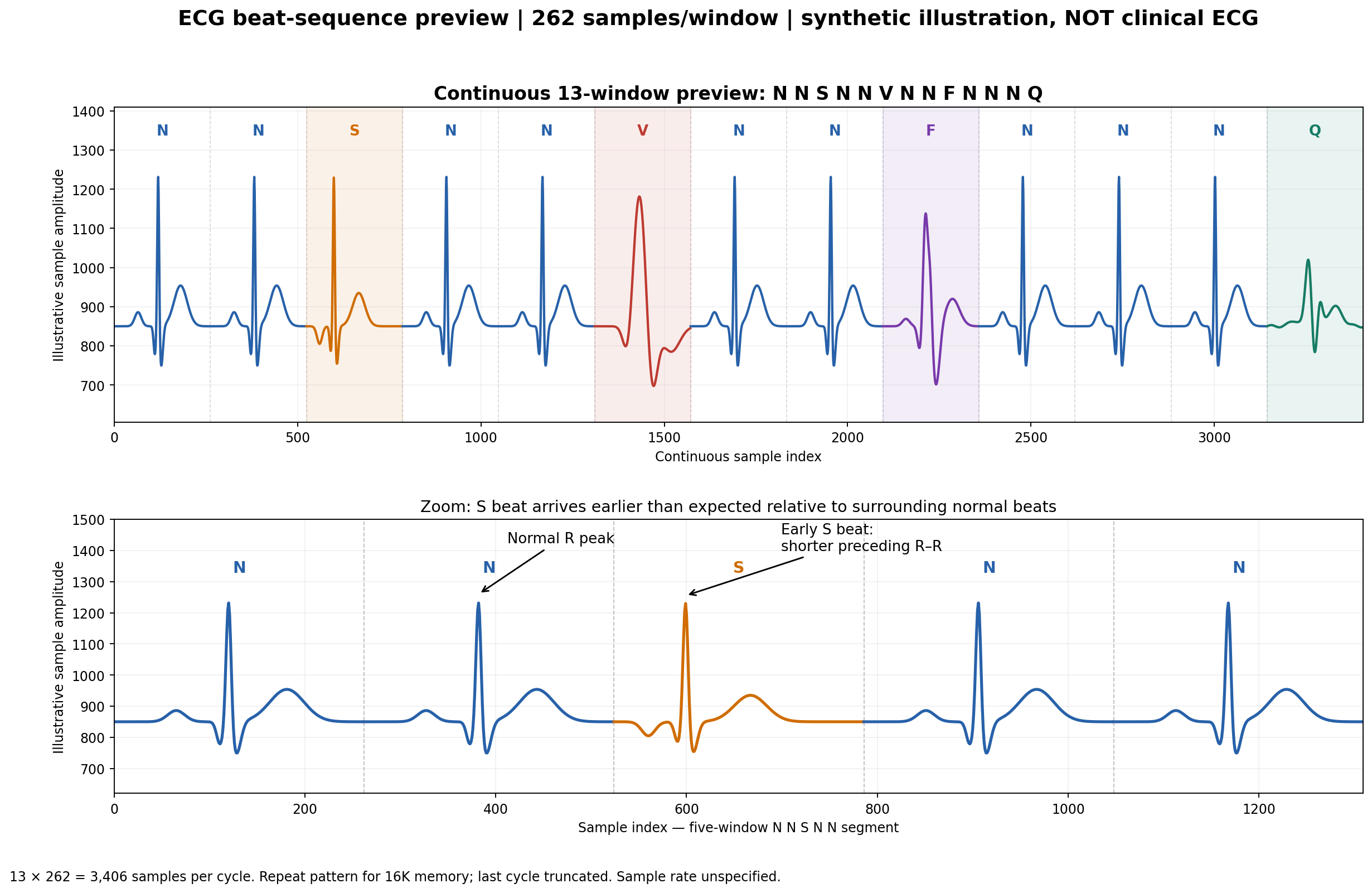
Spiking Neural Networks (SNNs) are widely explored for real-time biomedical signal processing, particularly in wearable healthcare devices for continuous Electrocardiogram (ECG) monitoring and cardiac arrhythmia classification. These networks offer advantages such as event-driven computation, reduced switching activity, and low-power operation. However, conventional FPGA-based SNN architectures face challenges related to high memory access requirements, hardware resource utilization, complex spike communication, and processing latency. Existing ECG classification methods employ delta-based spike encoding and Leaky Integrate-and-Fire (LIF) neurons with multiple weight memory banks and parallel processing lanes. Although these approaches provide effective classification, repeated weight accesses and dense spike processing can increase hardware complexity and energy consumption. To address these limitations, this work proposes a compact Two-Processing Element (Two-PE) SNAVA-inspired event-driven SNN architecture for five-class ECG arrhythmia classification. The proposed system employs a six-channel delta encoder to extract spike events from the ECG signal and its first and second derivatives, followed by a 6–64–128–64–5 SNN topology. Two reusable processing elements handle, even and odd neurons using local signed weight memories, shared layer scheduling, and fixed-point LIF computation. A double-buffered Address Event Representation (AER) memory stores active spike addresses, while a priority-based spike collector manages inter-layer event communication. The main novelty lies in replacing the conventional eight-bank weight access architecture with a compact, address-driven processing structure to reduce unnecessary memory operations and improve hardware efficiency. The proposed architecture will be developed using synthesizable Verilog HDL and evaluated through simulation and FPGA synthesis using suitable tools such as Vivado or Lattice Radiant, depending on the target device. Performance will be assessed in terms of LUT utilization, flip-flops, memory usage, maximum operating frequency, power consumption, inference latency, energy per classification, and classification accuracy against the existing baseline.
” Thanks for Visit this project Pages – Buy It Soon “
Terms & Conditions:
- Students are advised to watch the project video file output before the payment to test the requirement, correction will be applicable.
- After payment, if any correction in the project is accepted, but the requirement change is applicable with updated charges based upon the requirement.
- After payment, the student having doubts, corrections, software errors, hardware errors, and coding doubts are accepted.
- Online support will not be given more than 3 times. An initial explanation will be given end-to-end from scratch. Also provide recorded video.
- For the first time explanations, we execute all the codings and results in your system, and we record and provide completely with video file support; for the other 2, we can provide doubt clarifications only.
- If there is any issue with the software licence/system error, we can support and rectify that by the end of the day.
- Extra Charges For duplicate bill copies. Bill must be paid in full, no part payment will be accepted.
- After payment, we must send the payment receipt to our email ID.
- Powered by NXFEE INNOVATION, Pondicherry.
Payment Method:
- Pay the Add to Cart Method on this Page
- Deposit cash/check on our account.
- Pay Google Pay/Phone Pay: +91 9789443203
- Send cheque through courier
- Visit our office directly
- Pay using Paypal : Click here to get NXFEE-PayPal link